

Aastro Roofing Roof Resource Guide: Standards, Materials, & Engineering
Navigating the complexities of structural asset management requires accurate data and professional benchmarks. Whether you are addressing sudden weather degradation or planning a generational asset upgrade, choosing certified technical expertise is paramount. This resource guide, curated by seasoned commercial and residential roofing specialists, establishes clear frameworks for homeowners auditing their building envelopes.
1. South FL Residential Roofing Services & Asset Management
A home’s structural integrity depends heavily on its primary moisture barrier. Engaging premier residential roofing services involves far more than superficial shingle application; it requires a systemic evaluation of deck ventilation, deck load-bearing metrics, and thermal dynamics.
Why Professional Oversight Matters
When property owners evaluate residential roofing companies, they must look beyond basic licensing. Authoritative contractors employ certified forensic inspectors who analyze wind-uplift pressures and thermodynamic ventilation flaws. Certified residential roofing contractors ensure your building envelope complies with strict localized IBC (International Building Code) parameters, preserving structural warranties and maximizing your property’s valuation.
- Resource Insight: Before initiating a project, check local construction compliance standards via the National Roofing Contractors Association (NRCA) to verify credentialing frameworks.
2. Mitigation and Intervention: Residential Roof Repairs
Delaying intervention on a compromised moisture barrier accelerates structural decay. Micro-fissures, flashing separation, and granular loss require targeted residential roof repairs before moisture compromises the underlying plywood decking or triggers interior toxic mold outbreaks.
Diagnostics and Estimates
Ignoring compromised flashing elements transforms minor leakage into catastrophic wood rot. Comprehensive residential roof repair services utilize infrared thermal imaging to map subsurface moisture migration patterns invisible to the naked eye. When requesting residential roofing estimates, homeowners should expect a transparent, itemized breakdown detailing:
- Sub-decking replacement costs per square foot
- Flashing integration (apron, step, and counter-flashing)
- Ice and water shield membrane square footage
To secure localized code adherence and rapid emergency mobilization, partnering with vetted local residential roofers ensures your project remains protected against regional weather anomalies.
3. Structural Upgrades: Residential Roof Replacement Contractor Selection
When repair thresholds are exceeded due to extensive age or catastrophic storm impacts, full system replacement becomes mandatory. Choosing a certified residential roof replacement company guarantees that old, compromised underlayments are completely stripped down to the bare deck, allowing for a thorough inspection of structural rafters.
An elite residential roof replacement contractor will install a cohesive, multi-layered system:
[Bare Wood Decking] ➔ [Ice & Water Barrier] ➔ [Synthetic Underlayment] ➔ [Starter Strips & Asphalt Shingles/Metal Profiles]
As an industry standard, utilizing GAF residential roofing systems provides homeowners access to the Golden Pledge® Limited Warranty. This high-tier warranty covers both manufacturing defects and contractor workmanship errors for up to 25 years, a safeguard backed by rigorous factory-certified training.
4. Advanced Material Science: Hail Resistance & Class 4 Shingles
As extreme weather events scale in severity, standard asphalt compositions often fail prematurely under kinetic impacts. Investing in advanced material science is no longer optional for high-risk zones.
The Physics of Impact Resistance
To mitigate severe weather damage, engineers developed UL 2218 Class 4 impact-rated materials. During standard testing, these materials endure consecutive drops of a 2-inch steel ball from a height of 20 feet without fracturing the backing mat. Implementing class four shingles drastically minimizes post-storm operational interruptions.

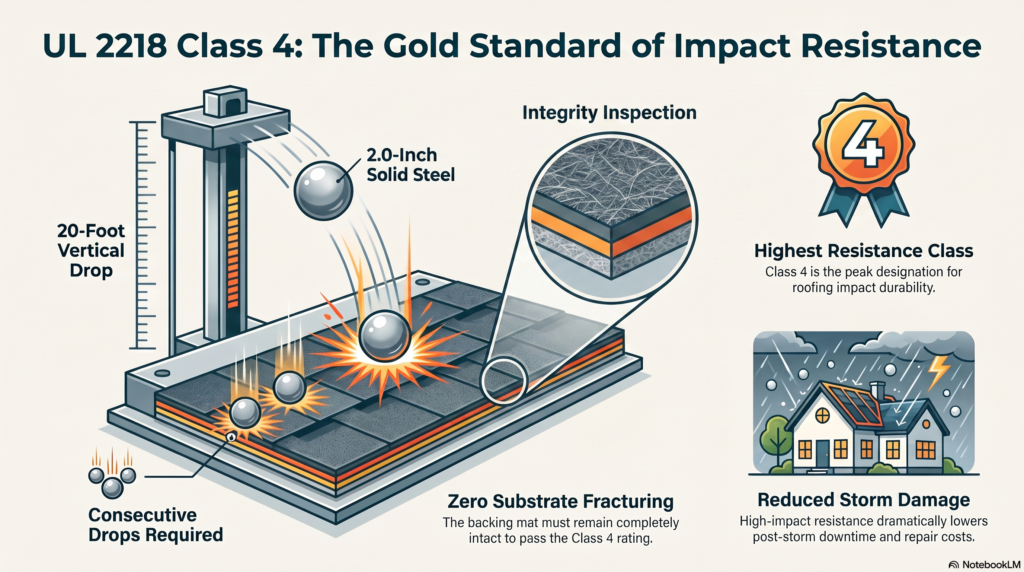
While initial hail resistant shingles cost structures reflect a premium product tier (often 10% to 25% higher than standard architectural options), the long-term ROI is realized through extended system longevity and substantial premium reductions from proactive homeowners insurance providers. These advanced hail proof roof shingles utilize polymer-modified asphalt (SBS) to provide rubber-like elasticity, absorbing severe kinetic impacts without losing crucial protective granules.
5. Architectural Metallurgy: Residential Standing Seam Metal Roofing
For homeowners seeking generational durability, architectural metal installations represent the pinnacle of modern building envelopes.
Engineering Benefits of Metal Roofing
Modern metal roofing for residential houses offers an operational lifespan exceeding 50 years, significantly outperforming traditional organic materials. Leading residential metal roof contractors recommend installing residential standing seam metal roofing systems.
Unlike exposed-fastener panels, standing seam configurations feature raised interlocking seams that conceal all mechanical fasteners beneath the metal skin. This design allows the metal panels to expand and contract smoothly during intense thermal cycles without loosening anchors or creating potential leak points.
- Sustainability & Engineering: Metal roofing reflects solar radiant heat, reducing cooling loads during peak summer periods. Homeowners looking to integrate these systems can learn more about metal performance metrics and structural engineering via the Metal Construction Association (MCA).
6. Holistic Building Science: HVAC and Thermal Dynamics
A roofing system cannot function in isolation; it operates as part of a holistic building envelope. There is a direct, critical link between attic ventilation, roof longevity, and HVAC efficiency. Poorly ventilated attics trap extreme heat and moisture, cooking asphalt shingles from underneath and forcing your cooling systems to work twice as hard.
To ensure your home maintains proper thermal equilibrium, balance your roof upgrades with verified indoor air quality and ventilation standards. Homeowners can find qualified HVAC professionals and technical ventilation resources through the Air Conditioning Contractors of America (ACCA). Additionally, participating in peer-to-peer building science networks like the ContractorTalk Forums can provide invaluable real-world insights into optimizing structural airflow and avoiding common ventilation pitfalls.