


TPO Is a Membrane—The Roof Is the Complete Assembly
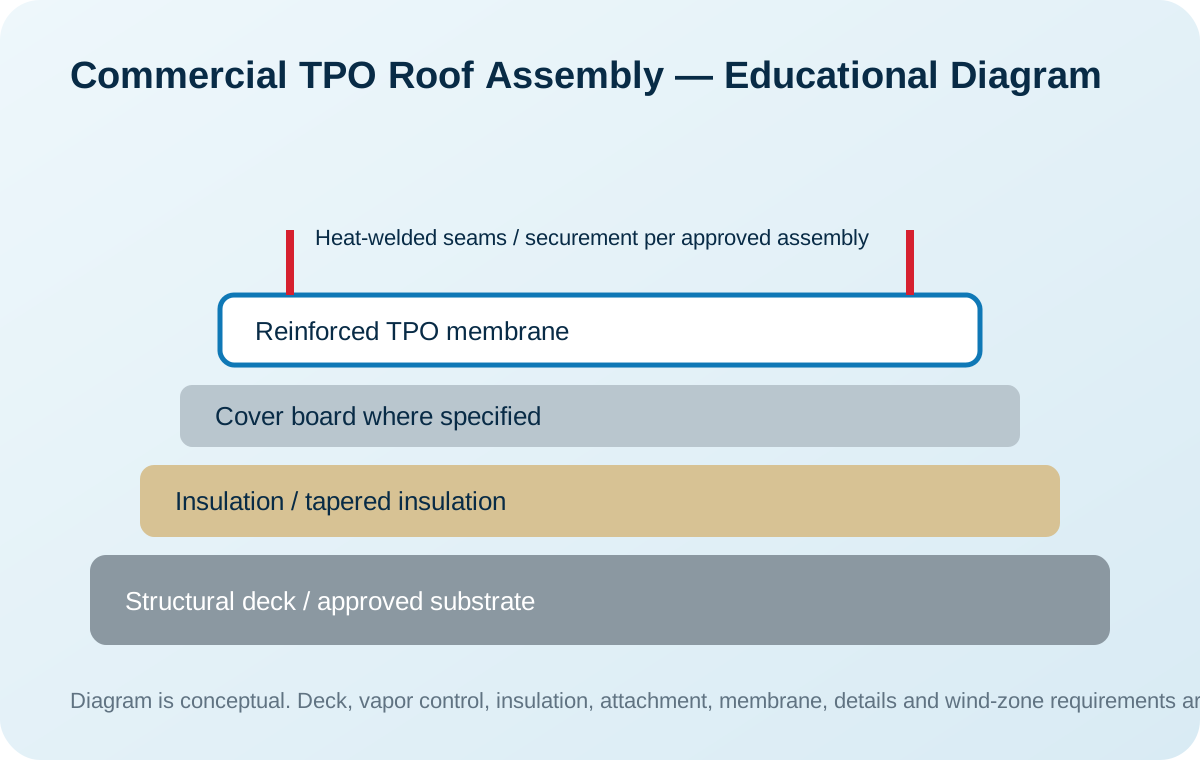
A commercial TPO roof depends on the structural deck, vapor control, insulation, tapered drainage, cover board, attachment, membrane thickness, heat-welded seams, flashings, perimeter design, rooftop traffic controls, inspections and documentation. The white sheet alone does not define the system.
TPO Selection Comes After the Building and Existing Roof Are Understood
This authority owns TPO-system design. It does not replace diagnosis, deck investigation, wind design, recover qualification or the decision to remove the existing roof.
Leaks & Moisture
Active water, recurring leaks and uncertain moisture move to commercial diagnostics or inspection before membrane selection.
Leak DiagnosticsDeck & Attachment
Deck type, substrate condition, insulation, cover board and securement determine which TPO assemblies can be considered.
Deck AuthorityWind & Roof Zones
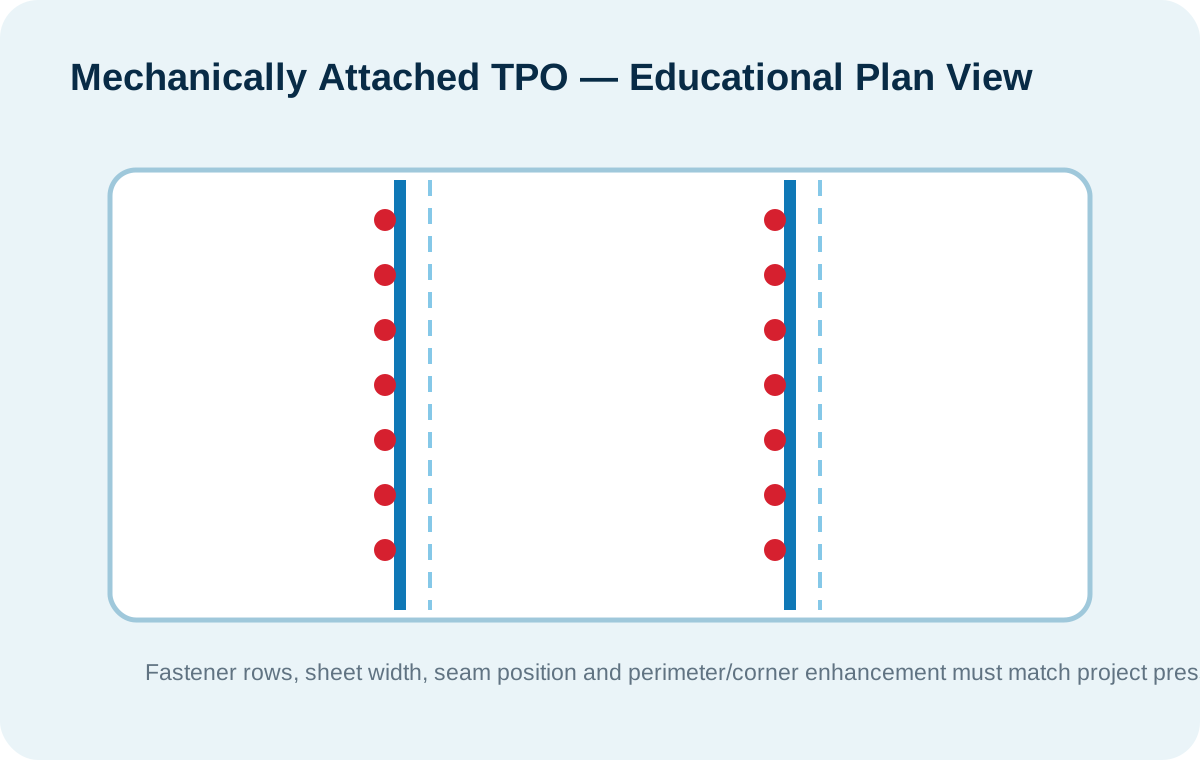
Field, perimeter and corner requirements follow project pressures and the exact approved assembly—not a universal fastening pattern.
Wind & CodeRecover or Remove
A recover retains a qualified existing assembly. Replacement removes failed or unsuitable materials before the new roof is built.
Recover AuthorityTPO vs PVC / KEE
Chemical, grease and process exposure can change the appropriate thermoplastic membrane direction.
PVC / KEE AuthorityComplete TPO Assembly
Once the gates are resolved, This authority owns membrane product, attachment method, heat-welded details, accessories, QC and manufacturer pathway.
What Is a Commercial TPO Roof?
TPO—thermoplastic polyolefin—is a reinforced, heat-weldable single-ply membrane used in low-slope roofing. ASTM D6878 establishes minimum membrane characteristics, but the standard itself does not design the in-place roof assembly, fire classification, attachment, compatibility or uplift resistance.
Reinforced Membrane
The field sheet contains reinforcing fabric or scrim and is available in multiple nominal thicknesses, widths, colors and backing configurations.
Heat-Welded Seams
Adjacent sheets and many accessories are fused with controlled hot air. The seam quality depends on clean surfaces, machine settings, speed, pressure and field verification.
Multiple Attachment Options
TPO may be mechanically attached, fully adhered, induction welded, self-adhered or installed as a fleece-backed/hybrid assembly—when the tested system permits.
One Part of the Roof
Deck, vapor control, insulation, taper, cover board, perimeter, flashings, drainage and rooftop operations can matter as much as the membrane brand.
Five Common TPO Attachment Strategies
No installation method is automatically best. The correct approach depends on the deck, pressure zones, building use, moisture, substrate, schedule, odors, membrane type and approved assembly.
“60 Mil” Does Not Tell You Everything
Nominal overall thickness is important, but it should not be the only comparison point. Review reinforcement, thickness over scrim, formulation, sheet width, backing, installation method, accessory system and the tested roof assembly.
| Membrane direction | What the number generally describes | What else must be compared | Typical planning context |
|---|---|---|---|
| 45-mil reinforced TPO | Nominal overall sheet thickness | Top-ply thickness, scrim, weathering package, attachment and warranty limits | Budget-sensitive assemblies only where the approved system and owner goals support it |
| 60-mil reinforced TPO | Nominal overall sheet thickness | Sheet width, attachment, top-ply, details, traffic and manufacturer requirements | Common baseline for many commercial replacement designs |
| 80-mil reinforced TPO | Nominal overall sheet thickness | Not a substitute for cover board, drainage, attachment or detail quality | Higher-demand, longer-horizon or more robust specifications where justified |
| Fleece-backed TPO | Total sheet may include fleece and may be 100+ mil overall | Field membrane thickness, fleece weight, adhesive/hot asphalt compatibility, substrate and recover design | Recover, puncture-resistance or hybrid attachment pathways |
| Self-adhered TPO | Membrane plus factory-applied adhesive system | Approved substrates, temperature, surface preparation, rolling, detailing and wind approval | Occupied buildings or projects seeking reduced field-applied adhesive |
Twelve Coordinated Parts of a Commercial TPO Roof
Performance is created by the assembly—not by the membrane in isolation.
Existing-Roof Investigation
Layers, leaks, cores, moisture, drainage, attachment, permits and prior repairs.
Removal or Recovery Prep
Controlled tear-off, selective removal or approved recovery preparation.
Structural Deck
Steel, concrete, lightweight concrete, wood, gypsum or specialty deck conditions.
Air & Vapor Control
Building use, interior humidity, climate, deck and condensation analysis.
Insulation
Thermal value, board type, layers, joints, attachment and energy-code requirements.
Tapered Drainage
Crickets, saddles, sumps and slope toward drains, scuppers or gutters.
Cover Board
Protection, dimensional stability, puncture resistance and approved substrate.
Attachment System
Fasteners, plates, adhesives, induction plates, rows and roof-zone enhancements.
TPO Membrane
Product, thickness, width, color, backing, layout and heat-welded seams.
Flashings & Equipment
Curbs, walls, pipes, drains, scuppers, expansion joints and transitions.
Perimeter & Traffic
Edge metal, coping, walkways, service paths and rooftop-trade protection.
Testing & Closeout
Weld checks, inspections, photographs, warranty records and maintenance file.
Seam Quality Must Be Produced and Verified in the Field
Hot-air welding can create strong, homogeneous seams, but only when the membrane is clean, dry and welded within an appropriate temperature, speed and pressure range.
Before Welding
- Confirm membrane identity and condition
- Remove dirt, moisture and contamination
- Set equipment for current weather and substrate
- Complete trial welds where required
During Welding
- Maintain consistent speed, heat and pressure
- Control wrinkles and fishmouths
- Protect the welding area from rain and condensation
- Use compatible detail membrane and accessories
After Welding
- Probe seams after adequate cooling
- Mark and repair voids or cold welds
- Document test cuts or destructive tests when specified
- Complete manufacturer inspection corrections
Long-Term Repairability
- Clean aged membrane using the manufacturer process
- Confirm remaining weldability
- Use approved patches and accessories
- Do not mix white membranes based on appearance alone
Field, Perimeter and Corner Zones Can Require Different TPO Attachment
The selected roof assembly must meet or exceed the calculated uplift pressure in each applicable roof zone. Sheet width, fastener or plate spacing, attachment rows, adhesive patterns, cover board, deck and edge conditions can change by zone.
The 8th Edition (2023) Florida Building Code remains the current statewide basis. The 9th Edition (2026) is in Florida’s 2026 adoption process; verify the effective date and adopted edition before permitting. The permit date, jurisdiction, project conditions, product approval/NOA and exact tested assembly control. This authority maintains the wind/code authority layer for this website.
Open Florida Wind, Code & Mitigation AuthorityA Dry-Looking Surface Does Not Prove the Assembly Is Dry
Commercial low-slope roofs can conceal wet insulation, trapped moisture, corroded deck, condensation and multiple undocumented layers. These conditions affect recovery eligibility, attachment, insulation value, warranty and final cost.
Moisture Investigation
Core cuts, test cuts, infrared, electrical-capacitance or other methods may be considered according to the roof assembly and project goals.
Vapor Control
Cold storage, high interior humidity, process facilities, concrete decks and conditioned buildings may require dedicated vapor analysis.
Wet-Material Removal
A recovery design should define how wet insulation, damaged cover board and deteriorated deck will be identified, removed and replaced.
Documentation
Moisture maps, core locations, photographs, unit prices and authorization thresholds should be established before opening the roof.

Screen Recovery Candidacy Before Pricing a TPO Overlay
A recovery can reduce tear-off and disruption, but it is not automatically appropriate. Existing layers, moisture, deck, attachment, fire classification, flashing height, drainage, added load and warranty rules must be verified.
A White Membrane Does Not Correct Structural Ponding
TPO can form a dependable waterproofing layer, but chronic ponding may be caused by deck deflection, compressed insulation, blocked outlets, insufficient slope, poorly located drains or downstream drainage limitations.
Primary Drainage
Drains, scuppers, gutters and leaders must be sized, placed, maintained and integrated into the membrane and overflow strategy.
Tapered Design
Tapered insulation, crickets, saddles and sumps should be developed from a roof plan—not improvised only where water was visible.
Flashing Height
Added insulation, recover boards and tapered systems can reduce available curb, wall and threshold height unless coordinated.

TPO Is Not Automatically the Best White Membrane for Every Building
Restaurants, food processing, airports, laboratories, manufacturing and buildings with concentrated exhaust may expose the roof to oils, grease, animal fats, fuels or chemicals. TPO generally offers lower chemical resistance than many PVC or KEE systems, so the exposure must be identified before the membrane is selected.
Map the Exposure
Identify exhaust fans, grease discharge, coolants, fuels, cleaning chemicals, process vents and prevailing drainage paths.
Compare Alternatives
PVC or KEE may be more appropriate for some exposures, but product-specific chemical guides and warranty exclusions still control.
Protect Service Areas
Use approved walkways, service pads and access paths around HVAC equipment, hatches and frequent maintenance zones.
Coordinate Other Trades
HVAC, plumbing, electrical and solar contractors should not cut, fasten through or contaminate the membrane without roofing coordination.
Compare the Exact TPO Product Family and Approved Assembly
The manufacturer name is only the start. Product, thickness, sheet width, attachment, backing, accessories, product approvals, registration, inspection and warranty eligibility must match the project.
EverGuard® TPO family
Smooth, self-adhered, fleece-backed and mechanically/adhered TPO pathways; exact product, accessories and assembly documentation control.
Official current resourcesSure-Weld® TPO family
Mechanically fastened, fully adhered, self-adhered, fleece-backed, induction-welded and metal-retrofit directions are documented within current Carlisle system literature.
Official current resourcesJM TPO systems
Reinforced, self-adhered and related TPO systems with manufacturer-specific insulation, cover-board, attachment, detail and guarantee requirements.
Official current resourcesVersiWeld® TPO family
Reinforced, QA self-adhered, fleece-backed, induction-welded and wide-sheet options; use current specifications and approval data for the project.
Official current resourcesUltraPly™ TPO systems
Commercial TPO membrane and accessory pathways, including multiple installation directions. Exact current system literature and project approvals control.
Official current resourcesMule-Hide TPO systems
Mechanically attached, fully adhered, self-adhered and fleece-backed TPO options are available subject to acceptable substrates, approvals and current system documents.
Official current resourcesUse Current Manufacturer and Approval Documents at Design and Permit Time
These sources support the authority boundaries on this page. They do not replace project engineering, the selected manufacturer specification, Florida Product Approval or Miami-Dade NOA limitations.
Real Aastro Work Where Proof Matters
Verified Aastro commercial-roof media is used for insulation, wall details, safety, high-rise conditions and repair investigation. Older approved TPO references are used only as system illustrations unless project identity is separately verified.
Build a Controlled TPO Evaluation Path
Answer seven questions. The result will identify the next investigation or design process without pretending to engineer the roof online.
Commercial TPO Roofing FAQs
Is every white commercial roof TPO?
No. PVC, KEE, white EPDM, coatings and surfaced asphaltic roofs can appear similar. Positive identification is required before repairs, coatings or replacement tie-ins are specified.
Is 60-mil TPO always better than 45-mil?
Not automatically. Thickness is one factor. Top-ply thickness, reinforcement, formulation, attachment, cover board, detailing, wind approval, traffic and maintenance also influence the complete roof.
Is 80-mil TPO always the best value?
No. It may be appropriate for certain owner goals and demanding assemblies, but added membrane thickness cannot correct wet insulation, poor drainage, weak attachment or defective details.
Are heat-welded seams stronger than adhesive seams?
Thermoplastic seams are fused with hot air and can be highly dependable when correctly prepared, welded and tested. Poor machine settings, moisture, contamination or incomplete probing can still create defects.
What is the difference between mechanically attached and fully adhered TPO?
Mechanically attached systems commonly secure the membrane at sheet seams or rows; fully adhered systems bond the field membrane to an approved substrate. The tested assembly, deck, pressure zones and project operations determine which is appropriate.
What is induction-welded TPO?
The membrane is heat-welded to specially coated plates below the sheet, allowing field attachment without conventional seam fastening at every row. The deck, plate layout, equipment, membrane and approved system must match.
Can TPO be installed over an existing metal roof?
Sometimes, through an approved retrofit system using flute fill, insulation, subframing or other components. Structural capacity, corrosion, purlin spacing, condensation, attachment, fire classification and warranty requirements must be evaluated.
Can TPO be installed over an existing roof without tear-off?
Only when the existing layers, moisture, deck, attachment, fire classification, drainage, flashing heights, load and product approval support an eligible recovery assembly.
Does a white TPO roof guarantee lower energy bills?
No. Reflectivity can reduce roof-surface heat gain, but building energy use also depends on insulation, air leakage, HVAC efficiency, internal loads, roof area, reflectance retention and operating conditions.
Can TPO handle restaurant grease or chemical exhaust?
Exposure must be reviewed. TPO chemical compatibility is product- and exposure-specific. Where grease, oils, fuels, process exhaust or concentrated chemicals are present, compare the exact TPO formulation and warranty limitations against PVC, KEE or other suitable systems before selection.
Does ponding water automatically mean the TPO failed?
No. Ponding can result from deck deflection, compressed insulation, blocked drainage, inadequate slope or outlet limitations. The membrane and drainage system should be evaluated separately and together.
Why use a cover board under TPO?
An approved cover board can improve substrate stability, protection, puncture resistance, fire or hail performance and the surface used for adhesion. It does not replace insulation or wind attachment.
How are TPO wind pressures addressed in South Florida?
The system must meet the calculated uplift pressure in each roof zone. The product approval, deck, insulation, cover board, fasteners, plates, adhesives, sheet layout and perimeter enhancement must be coordinated.
What damages TPO roofs most often?
Common risks include punctures, rooftop-trade damage, contaminated seams, poor details, blocked drainage, unprotected traffic, incompatible repairs, failed edge conditions and concealed moisture.
Can an old TPO roof be coated instead of replaced?
Potentially, but only after membrane identification, cleaning, adhesion testing, moisture investigation, repair, drainage review and manufacturer compatibility verification. A coating is not automatically a substitute for replacement.
What should a commercial TPO proposal identify?
It should identify the deck, removal or recovery, vapor control, insulation, taper, cover board, attachment, membrane product and thickness, sheet layout, flashings, edges, drainage, traffic protection, testing, inspections, warranty pathway and concealed-condition procedures.
Commercial TPO Roofing Across Palm Beach and Broward Counties
Standard service coverage includes the following cities and surrounding communities, subject to project scope and scheduling.
Request a Controlled Roof Investigation
Use the form for planning. Active interior water or a life-safety condition should be handled by phone first.
TPO is the answer only after the building, moisture, deck, drainage and wind design support it.
Use this authority to develop the TPO system. Move out of TPO when the condition investigation or operating exposure points somewhere else.
Aastro Roofing Company
Florida Certified Roofing Contractor CCC1330967. Licensed and insured. Current certificates available upon appropriate request.
Call 561-409-3280