Summary:
What Professional Roofing Contractors Actually Do
A professional roofing contractor brings more than a ladder and some tools. We bring years of training, manufacturer certifications, and knowledge of Florida’s strict building codes that evolved after Hurricane Andrew devastated South Florida in 1992.
Professional contractors constantly study new roofing technologies and materials. We know which systems hold up against Broward County’s coastal storms and which ones fail. We understand how proper ventilation prevents premature shingle failure in our heat. We can spot underlying structural issues that YouTube videos won’t teach you to recognize.
When you hire a licensed professional, you’re getting someone who’s accountable. We carry insurance that protects you if something goes wrong. We pull permits and schedule inspections. We offer warranties on both materials and workmanship. Most importantly, we know how to keep your manufacturer’s warranty intact—something DIY work automatically voids.
Roofing Safety: Why Professionals Have the Right Equipment and Training
Here’s a number that should make you think twice about climbing on your roof: more than 150,000 Americans need medical treatment every year because of roofing accidents. The overwhelming majority—97%—happen at home, where people without proper training attempt repairs themselves.
Roofing ranks as one of the deadliest occupations in construction. In 2023 alone, 134 roofers died on the job, with 82% of those fatalities caused by falls. That’s a fatal injury rate of 51.8 per 100,000 workers. Even professional roofers with extensive safety training face these risks daily.
Now consider what you’re up against as a homeowner. You don’t have fall protection systems. You probably don’t own proper safety harnesses or know how to anchor them correctly. You’re working on a sloped, potentially slippery surface in Florida heat, often without the right footwear or equipment.
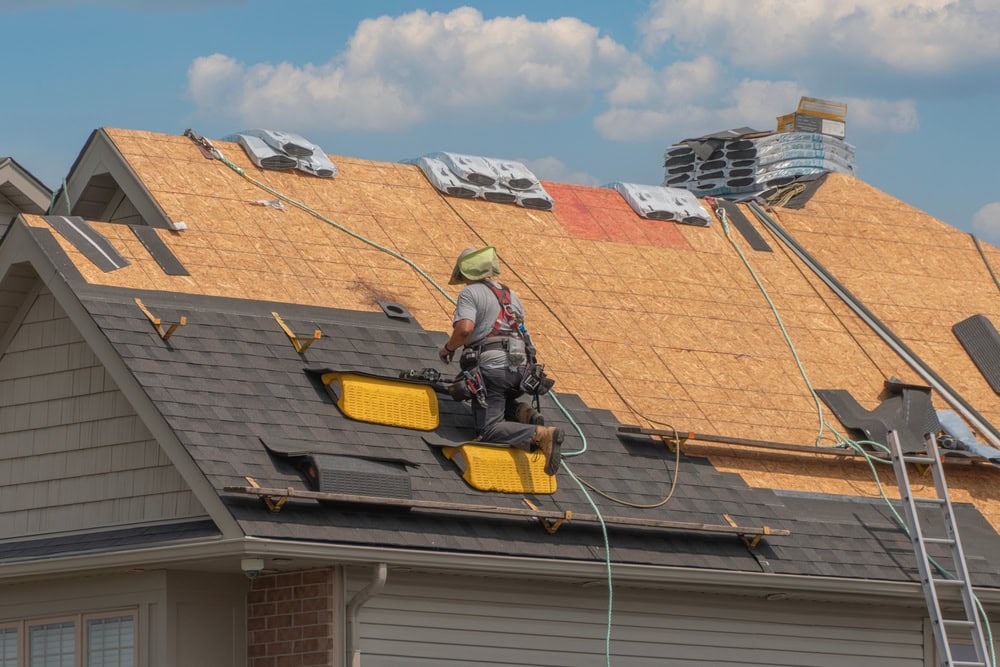
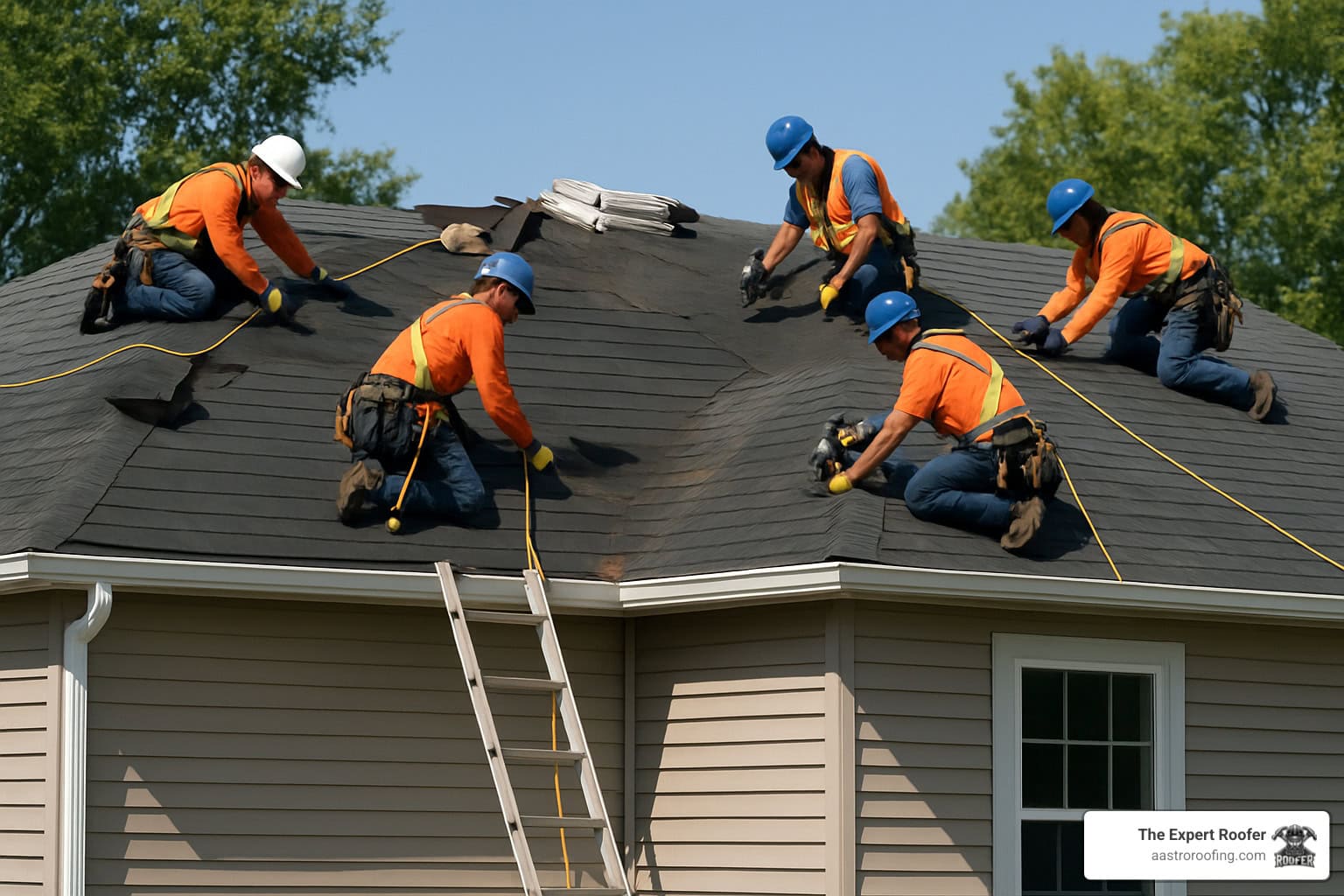
Professional roofing contractors invest heavily in safety equipment and training. We use guardrails, personal fall-arrest systems, and proper scaffolding. We know how to navigate steep slopes and work around power lines. We follow OSHA regulations designed to prevent the accidents that send thousands of people to emergency rooms.
Every day, someone falls from a ladder or roof. Some walk away with broken bones. Others don’t come home. The money you think you’re saving by doing it yourself isn’t worth that risk. Your family needs you in one piece more than they need a DIY repair.
Beyond the immediate danger of falls, roofing work involves other hazards most homeowners don’t consider. Hot tar can cause severe burns. Electrical lines near your roof edge present electrocution risks. Heavy materials can cause back injuries or crush injuries if dropped. Even walking on certain types of shingles the wrong way can cause permanent damage—to both you and your roof.
Professional contractors know these risks because we’ve been trained to identify and avoid them. We have workers’ compensation insurance that covers our employees if accidents happen. When you hire a professional, you’re not just protecting yourself from physical harm—you’re protecting yourself from liability if someone gets hurt on your property.
Florida Building Codes and Why They Matter for Your Roof
Here’s a number that should make you think twice about climbing on your roof: more than 150,000 Americans need medical treatment every year because of roofing accidents. The overwhelming majority—97%—happen at home, where people without proper training attempt repairs themselves.
Roofing ranks as one of the deadliest occupations in construction. In 2023 alone, 134 roofers died on the job, with 82% of those fatalities caused by falls. That’s a fatal injury rate of 51.8 per 100,000 workers. Even professional roofers with extensive safety training face these risks daily.
Now consider what you’re up against as a homeowner. You don’t have fall protection systems. You probably don’t own proper safety harnesses or know how to anchor them correctly. You’re working on a sloped, potentially slippery surface in Florida heat, often without the right footwear or equipment.
Professional roofing contractors invest heavily in safety equipment and training. We use guardrails, personal fall-arrest systems, and proper scaffolding. We know how to navigate steep slopes and work around power lines. We follow OSHA regulations designed to prevent the accidents that send thousands of people to emergency rooms.
Every day, someone falls from a ladder or roof. Some walk away with broken bones. Others don’t come home. The money you think you’re saving by doing it yourself isn’t worth that risk. Your family needs you in one piece more than they need a DIY repair.
Beyond the immediate danger of falls, roofing work involves other hazards most homeowners don’t consider. Hot tar can cause severe burns. Electrical lines near your roof edge present electrocution risks. Heavy materials can cause back injuries or crush injuries if dropped. Even walking on certain types of shingles the wrong way can cause permanent damage—to both you and your roof.
Professional contractors know these risks because we’ve been trained to identify and avoid them. We have workers’ compensation insurance that covers our employees if accidents happen. When you hire a professional, you’re not just protecting yourself from physical harm—you’re protecting yourself from liability if someone gets hurt on your property.
The True Cost of DIY Roofing vs Hiring a Professional
That $500 you think you’ll save by doing your own roof repair? It might end up costing you $15,000 or more. Here’s why the math doesn’t work out the way most homeowners expect.
First, there’s the warranty issue. Over 60% of roofing warranty claims get denied because of homeowner errors. When you attempt DIY repairs, you immediately void both your manufacturer’s warranty and any workmanship warranty from your original installation. If your roof fails prematurely, you’re paying for the entire replacement out of pocket.
Then there’s the quality of the work itself. Without professional expertise, DIY repairs often don’t address the root cause of problems. You might patch a visible leak while missing the underlying issue that caused it. Small problems that could’ve been fixed correctly the first time turn into major repairs within months. What started as a simple fix becomes a complete section replacement because water damage spread while you thought the problem was solved.
Professional contractors complete the job right the first time. Our experience helps us spot related issues during repairs. We have relationships with suppliers that get us better prices on materials than you’ll find at big-box stores. We work efficiently because we’ve done the same repair hundreds of times. The time you’d spend researching, gathering materials, and struggling through the work—we complete in a fraction of the time with better results.
How Roofing Warranties Work and Why Professionals Protect Them
Your roof warranty is only valuable if it stays valid. Most homeowners don’t realize how easy it is to accidentally void coverage until they try to file a claim and discover they’re not protected.
Roofing warranties come in two types. Manufacturer warranties cover defects in the materials themselves—shingles, underlayment, flashing. These typically last 25 to 50 years depending on the product. Workmanship warranties cover installation errors and usually run from one year to the lifetime of the roof, depending on the contractor.
Both types of warranties have strict requirements. Manufacturers require that their products be installed by certified contractors following exact specifications. The nailing pattern matters. The underlayment type matters. The ventilation setup matters. If any component isn’t installed according to their guidelines, the warranty is void from day one.
DIY work automatically disqualifies you from warranty coverage. Even if you follow online tutorials perfectly, manufacturers won’t honor warranties on self-installed products. The same applies to work done by unlicensed contractors or handymen. Warranty coverage requires professional installation by qualified, certified contractors.
Here’s where it gets tricky. Even after professional installation, certain actions can void your warranty. Hiring a different contractor for repairs might invalidate your workmanship warranty. Adding satellite dishes, solar panels, or skylights without proper installation can void coverage in those areas. Pressure washing your roof—something many homeowners do to remove algae—can void shingle warranties because the high pressure damages the protective granules.
Professional roofing contractors understand these warranty requirements because we deal with them constantly. We’re certified by manufacturers like GAF, CertainTeed, and Owens Corning. We know exactly what installation methods keep warranties intact. We document our work properly so you have proof of professional installation if you ever need to file a claim.
When you hire a professional, you’re also getting our workmanship warranty. If something goes wrong with our installation, we fix it at no cost to you. That warranty transfers some of the risk away from you and onto the contractor. With DIY work, you bear all the risk. If your repair fails, you pay for the fix. If it causes additional damage, you pay for that too.
The warranty protection alone justifies the cost of professional installation for most homeowners. A roof is a major investment—typically $10,000 to $30,000 for a full replacement in Broward County. Protecting that investment with valid warranties makes financial sense. Saving a few hundred dollars on a DIY repair while risking thousands in warranty coverage doesn’t.
What Licensed and Insured Really Means for Roofing Contractors
You see “licensed and insured” on every roofing contractor’s website, but what does that actually protect you from? The answer matters more than most homeowners realize.
A roofing contractor’s license proves we’ve demonstrated specific knowledge and skills. In Florida, contractors must pass exams covering building codes, safety regulations, and proper installation techniques. We need a certain amount of verified experience. We have to maintain continuing education to keep our licenses current. The state can revoke our license if we violate standards or fail to meet obligations.
When you hire an unlicensed contractor or attempt DIY work, none of those protections exist. There’s no governing body holding anyone accountable. There’s no recourse if the work is substandard. There’s no requirement that the person doing the work actually knows what they’re doing.
Insurance is equally important. Professional roofing contractors carry multiple types of coverage. General liability insurance protects you if we accidentally damage your property during work. Workers’ compensation covers our employees if someone gets injured on your property. Without these protections, you could be held liable for accidents that happen during roofing work.
Think about what that means for a DIY project. If you fall off your roof and get seriously injured, your health insurance might not cover it if they determine you were engaged in contractor-level work. If you damage your neighbor’s property—say a piece of roofing material flies off and breaks their window—you’re personally liable. If you hire an unlicensed contractor and their worker gets hurt on your property, you could face a lawsuit.
Professional contractors also carry bonds that protect customers if the contractor fails to complete work or doesn’t pay suppliers. This financial protection gives you recourse if something goes wrong with the business relationship. You’re not just trusting someone’s word—there are legal and financial mechanisms ensuring we follow through on commitments.
The cost difference between licensed professionals and unlicensed contractors often comes down to these protections. Unlicensed operators can bid lower because they’re not paying for insurance, bonding, licensing fees, or the training required to maintain credentials. They’re passing the risk to you in exchange for a lower price. That’s not a bargain—it’s a liability.
When you verify that a roofing contractor is properly licensed and insured, you’re confirming we meet minimum professional standards. You’re ensuring there’s accountability if problems arise. You’re protecting yourself from financial and legal risks that could far exceed any money you’d save by cutting corners.
Making the Right Choice for Your Broward County Roof
Your roof isn’t the place to experiment or cut corners. Between Florida’s building codes, manufacturer warranty requirements, and the genuine safety risks involved, professional roofing contractors provide value that goes far beyond the immediate repair cost.
The choice comes down to this: you can save a few hundred dollars now and risk thousands later, or you can invest in professional work that protects your home, maintains your warranties, and gives you peace of mind. For most Broward County homeowners, that’s not really a choice at all.
When you’re ready to work with a roofing contractor who brings four generations of expertise and a track record of quality work, Aastro Roofing Company is here. We’ve been protecting South Florida homes since our family entered the roofing business in the 1940s, and we bring that depth of experience to every project we touch.