


Commercial EPDM Roofing Systems
EPDM can be a durable commercial roofing option when the membrane, seam technology, deck, insulation, attachment, drainage, wind pressures, color, chemical exposure and flashing details are selected as one approved system. It is not automatically the best membrane for every South Florida roof.
EPDM is the membrane—not the complete roof
Ethylene propylene diene monomer is a vulcanized synthetic-rubber sheet used in single-ply roof systems. The installed roof still depends on every layer below it and every edge, seam, flashing and penetration tied into it.
EPDM
Flexible rubber membrane available in nonreinforced, internally reinforced and fabric-backed forms. Seams and accessories rely on primers, pressure-sensitive tapes, adhesives and manufacturer-specific details.
TPO, PVC and KEE
Thermoplastic membranes are normally heat welded. They are not interchangeable with EPDM and cannot be identified solely by surface color.
Asphaltic systems
Modified bitumen and built-up roofing use asphaltic sheets or multiple plies. Direct contact, tie-ins and recovery over asphaltic materials require an approved separator or assembly.
Repair, restore, recover and replace are different scopes
EPDM can participate in more than one roof-management strategy, but the retained roof has to qualify for the strategy selected. Membrane color or thickness alone does not decide the capital path.
Diagnose / Inspect
Use when membrane identity, moisture, deck, attachment, drainage or the actual leak path is uncertain.
Repair
Correct defined EPDM defects when the surrounding membrane, seams, flashings, insulation and substrate remain serviceable.
Commercial RepairRestoration / Coating
Consider only after positive membrane identification, moisture screening, surface preparation and written compatibility with the selected restoration system.
Coatings & RestorationRecover
Install a new approved roof assembly over a qualified retained roof only when layers, moisture, deck, load, fire, drainage, flashing heights and approvals allow it.
Commercial RecoverReplacement
Remove and rebuild when wet materials, substrate/attachment problems, repeated failures, drainage limits or other conditions make retention inappropriate.
Commercial Flat ReplacementSix EPDM system directions
No installation method is automatically best. The roof deck, wind pressures, substrate, moisture, operations, structural capacity and manufacturer-approved assembly control the final direction.
Black, white and cool-gray EPDM behave differently—but membrane color is not insulation
Solar reflectance affects roof-surface temperature. Building energy and condensation performance still depend on insulation, air leakage, vapor control, interior humidity, deck type, HVAC and operating conditions.
Black EPDM
Traditional black EPDM absorbs more solar energy. It may promote roof dry-down in some climates, but South Florida cooling loads and interior conditions must be evaluated.
White EPDM
White-on-black and reinforced white EPDM can provide reflective options. Cleaning, reflectance retention, product approvals and the complete thermal assembly still matter.
Cool-gray EPDM
Gray products can provide an intermediate reflectance direction with lower glare and different dry-down characteristics. Availability and project suitability are product-specific.
“60-mil EPDM” is not a complete specification
The proposal should identify the exact product, reinforcement, backing, sheet width, color, attachment, seam technology, accessories, approved assembly and warranty pathway.
| Membrane direction | Common examples | Typical use | Critical questions |
|---|---|---|---|
| Nonreinforced EPDM | 45, 60 and 90 mil | Fully adhered and ballasted; some product-specific options | Weathering thickness, puncture exposure, sheet size, substrate and warranty details |
| Internally reinforced EPDM | 45, 60 and 75 mil | Mechanically attached and fully adhered systems | Thickness over scrim, fastener rows, sheet width, perimeter enhancements and puncture demands |
| Fabric-backed / fleece-backed EPDM | Product-specific total thicknesses, including heavier 115- and 145-mil directions | Adhered, low-rise foam or adhesive-less fleece attachment systems | Backing, adhesive or hook-and-loop substrate, puncture resistance, recovery eligibility and approved deck |
| White-on-black EPDM | Commonly 60 and 90 mil | Reflective adhered and selected reinforced systems | Accessories, color-matched details, reflectance, fire rating and attachment limitations |
| Self-adhered EPDM | Product-specific 60-mil directions | Low-odor, rapid installation and occupied buildings | Substrate preparation, temperature, primer, release liner, rolling and warranty limitations |

EPDM is normally primed and taped—not heat welded
Dependable EPDM seams require positive membrane identification, cleaning, approved primer, aligned tape, sufficient mating pressure and inspection. Factory-applied tape can improve consistency, but field preparation still controls the bond.
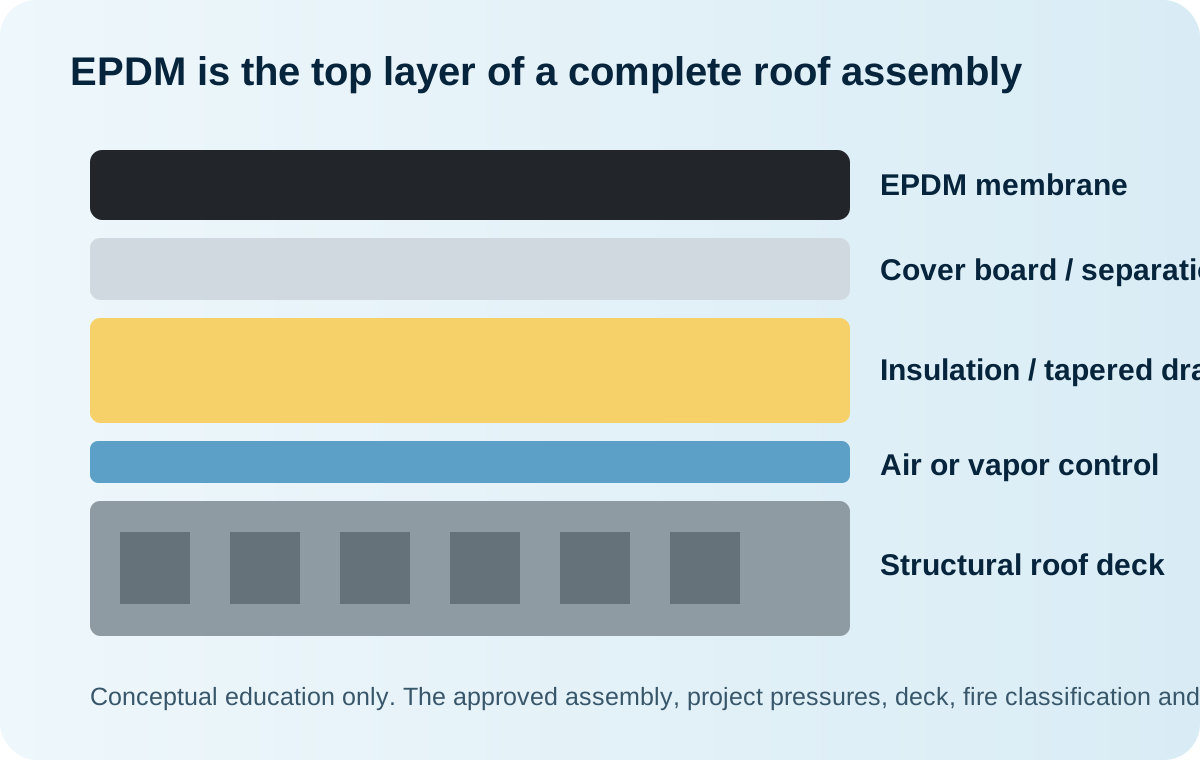
The membrane depends on every layer beneath it
EPDM should be specified as a complete assembly rather than a loose membrane description.
A black or white roof cannot be identified by color alone
White EPDM, TPO, PVC, KEE and coatings can look similar from a distance. Black surfaces may be EPDM, modified bitumen, BUR or a coating. Repair materials, primers, solvents and tie-ins must match the actual roof.
Review records
Look for warranties, invoices, product labels, permits, core logs and manufacturer inspection records.
Inspect seams
Tape seams, factory-applied tape, heat welds, cap-sheet laps and coating transitions provide useful clues.
Test when needed
Core cuts or material testing may be necessary when records and field characteristics do not establish the membrane.
Choose compatible work
Only then should the repair, recovery, coating, tie-in or replacement system be finalized.
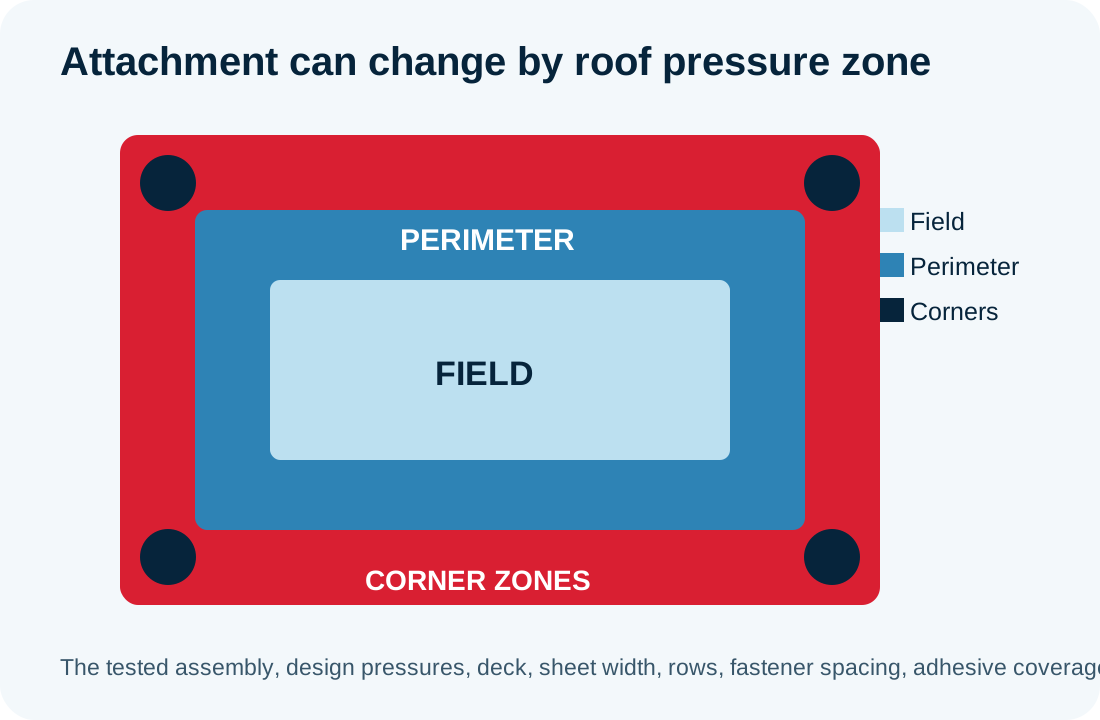
Field, perimeter and corner zones may require different attachment
A membrane product name does not establish the fastening pattern. The approved assembly must satisfy the design pressure in each roof zone.
Ballast changes structural load, drainage, access and wind design
Ballasted EPDM can reduce adhesive use and protect the membrane, but the system is not simply loose membrane with rock on top.
Weight and structure
Ballast commonly adds substantial dead load. The deck, framing, insulation and building structure must support the complete installed assembly.
Drainage and maintenance
Aggregate can obstruct drains, hide membrane conditions, complicate leak tracing and make repairs or future removal more labor intensive.
Wind and perimeter control
Building height, exposure, aggregate size, parapets, edge restraint and the approved system control whether a ballasted assembly is appropriate.
EPDM is not the default choice around grease, oils, fuels or every industrial exhaust
The actual chemical, concentration, temperature, duration, spill path and exhaust pattern should be reviewed. PVC or KEE may be a better direction for some grease- or chemical-exposed properties.
| Exposure | EPDM planning concern | Required decision |
|---|---|---|
| Ordinary office or retail | Normal weathering, rooftop service and drainage | Compare approved EPDM, TPO, PVC, modified-bitumen and BUR assemblies |
| Restaurant grease and animal fats | EPDM may not be appropriate for direct or recurring exposure | Map discharge areas and compare PVC or KEE manufacturer guidance |
| Oils, fuels and solvents | Potential swelling, softening or loss of performance | Obtain exact chemical data and written compatibility review |
| Laboratory or process exhaust | Unknown concentration and condensate can be highly localized | Coordinate the roof design with facility operations and manufacturer technical services |
| Cooling towers and HVAC discharge | Water chemistry, treatment chemicals and persistent wetting | Review discharge, drainage, maintenance access and membrane compatibility |
Direct adhesion to an insulated metal panel is not assumed
An insulated metal panel is a proprietary structural and thermal component—not automatically a conventional steel roof deck or approved membrane substrate.

The supporting construction changes the EPDM specification
Use the dedicated Commercial Roof Decks guide for a deeper explanation of concrete, steel, gypsum, TECTUM, LWIC and mixed construction.
Can EPDM be installed over the existing roof?
This tool organizes the investigation. It does not replace moisture mapping, core cuts, engineering, product approval or manufacturer review.
Product families are not interchangeable
The exact membrane, accessories, adhesives, deck, assembly, warranty registration and installer requirements must be verified for the project.

Elevate RubberGard
Black and EcoWhite EPDM directions with adhered, mechanically attached and ballasted system options, subject to current regional documents.
Product-family education only
Carlisle Sure-Seal
Black, white, cool-gray, reinforced and fleece-backed EPDM families with varied attachment and long-term detail pathways.
Product-family education onlyVersico VersiGard
Reinforced, nonreinforced, QA self-adhered, cool-gray and VersiFleece RapidLock directions.
Product-family education onlyMule-Hide EPDM
Black, white-on-black, reinforced, nonreinforced and self-adhered systems with pressure-sensitive accessories.
Product-family education onlyJohns Manville EPDM
45-, 60- and 90-mil nonreinforced, reinforced, factory-taped, self-adhered and white EPDM system families.
Product-family education onlyCommercial low-slope conditions that affect an EPDM decision
These verified Aastro photographs show deck, insulation, walls, repairs, access and rooftop conditions. They are not all represented as EPDM installations.


Organize the right EPDM investigation path
Answer seven questions. The result is educational routing—not engineering, a roof specification, a warranty approval or a binding estimate.
EPDM claims must resolve to the exact membrane, assembly and permit-time requirements
These are source-control anchors for this authority website. Product approvals, manufacturer details and code editions still require project-specific verification before permitting or warranty registration.
ASTM D4637 / D4637M
Current active EPDM sheet specification. It classifies nonreinforced, reinforced and fabric-backed EPDM while expressly leaving fire, field seam, compatibility and uplift design to the installed roof system.
ASTM EPDM specificationCarlisle EPDM systems
Current resources document black and white EPDM plus adhered, mechanically fastened and ballasted system families. Exact product, attachment and warranty requirements control.
Carlisle EPDM resourcesJohns Manville EPDM
Current JM system resources include nonreinforced, reinforced, factory-taped and self-adhered EPDM directions and recover accessories. Use only the current project-specific assembly details.
JM EPDM systemsEPDM seam chemistry
Current manufacturer seam systems use EPDM-specific preparation, primer and pressure-sensitive tape. EPDM field seams are not thermoplastic heat welds.
Mule-Hide seam systemFlorida code & approvals
As of August 14, 2026, the 8th Edition (2023) Florida Building Code remains the current statewide basis; the 9th Edition (2026) is in Florida’s 2026 adoption process; verify the effective date before permitting. Verify the code edition and current product approval at permit time.
Florida Building CommissionFlorida Product Approval search
Commercial EPDM roofing FAQs
Is EPDM appropriate for South Florida?
It can be, but suitability depends on color, approved assembly, roof deck, wind pressures, chemical exposure, drainage, insulation, vapor control, building use and manufacturer support. EPDM should not be presented as universally appropriate or inappropriate for every Florida building.
Is every black roof EPDM?
No. Black modified bitumen, built-up roofing, asphaltic coatings and other materials can look similar. Records, seams, cores and material characteristics may be needed for positive identification.
Is every white rubber-looking roof TPO?
No. White EPDM, PVC, KEE and coatings may resemble TPO. Positive identification is required before welding, taping, priming, coating or tying into the roof.
Are EPDM seams heat welded?
Normally no. EPDM seams use approved primers, pressure-sensitive tape, adhesives and manufacturer-specific details. TPO, PVC and KEE are thermoplastic membranes commonly joined by hot-air welding.
What is the difference between reinforced and nonreinforced EPDM?
Nonreinforced EPDM provides a monolithic rubber sheet and is common in adhered or ballasted systems. Internally reinforced EPDM incorporates a scrim and is commonly used in mechanically attached or adhered systems. Thickness over the reinforcement and total weathering material should be reviewed.
Can EPDM be installed over an existing roof?
Possibly, but only when layers, moisture, deck, attachment, drainage, fire classification, flashing heights, load, product approvals and manufacturer requirements support a recovery assembly.
Is ballasted EPDM appropriate for a high-rise building?
That cannot be assumed. Structural load, wind exposure, building height, parapets, aggregate size, perimeter restraint, drainage and the approved system must be reviewed.
Can EPDM be adhered directly to an insulated metal panel?
Only when the panel manufacturer, membrane manufacturer, adhesive compatibility, structural attachment, panel coating, joints, core, fire classification, vapor control and wind-uplift assembly support that exact installation. A generic reference to “metal” is not enough.
Is black EPDM less energy efficient than white EPDM?
Black membrane absorbs more solar energy, while white membrane can reduce roof-surface temperature. Building energy performance still depends on insulation, air leakage, HVAC, interior loads, vapor control and operating conditions.
Is EPDM resistant to restaurant grease and oils?
EPDM is not the default choice for recurring grease, animal-fat, petroleum or solvent exposure. PVC or KEE may be more appropriate in some cases, subject to exact chemical and manufacturer review.
Can an EPDM roof be coated?
Some aged EPDM roofs may be candidates after exact membrane identification, repairs, cleaning, primer and adhesion testing. Compatibility, attachment, moisture, drainage and warranty implications must be addressed first.
How is EPDM attached in high-wind zones?
The tested assembly and project pressures control. Sheet width, fastener rows, plate spacing, perimeter securement, adhesives, cover board, deck withdrawal resistance and edge systems may differ among field, perimeter and corner zones.
What membrane thickness should be selected?
Thickness is only one factor. Reinforcement, backing, weathering material, traffic, hail, attachment, sheet width, details, warranty goals and the complete assembly should be compared.
Can one isolated EPDM leak be repaired?
Often, if the membrane, seams, flashings, insulation, deck and surrounding area remain serviceable and compatible repair materials are available. Moisture may have traveled beyond the visible defect.
Does an EPDM warranty guarantee roof life?
No. Warranty documents have specific terms, exclusions, maintenance duties and claim procedures. A warranty term is not a guaranteed service life or proof that every project qualifies.
What should a commercial EPDM proposal identify?
The exact membrane, thickness, reinforcement, color, sheet width, attachment method, deck, insulation, cover board, vapor control, seams, accessories, drainage, pressure zones, edge system, warranty pathway, concealed-condition process and closeout documents.
Provide the information needed to organize the roof investigation
Submitting this form opens a pre-addressed email to Aastro Roofing. Send that email to complete your request. For immediate service, call 561-409-3280.
- Property and decision authority
- Known roof and deck information
- Active-water condition
- Moisture, chemical or operational constraints
- Available plans, warranties, surveys and photographs
Official standards and manufacturer resources used for this educational page
Product documents change. Current specifications, approvals, details and warranty requirements must be reconfirmed before proposal and installation.
Start with the existing roof and building—not a generic EPDM price
Aastro can organize membrane identification, moisture and deck investigation, system comparison, wind-zone review and a commercial replacement or repair pathway.
