


Commercial Spray Polyurethane Foam Roofing Systems
Spray polyurethane foam can create a seamless, insulated roof system when the substrate, moisture, environmental conditions, foam density, slope, coating, wind design, overspray controls and quality-assurance process are handled as one coordinated assembly. The foam itself is not a finished roof and is not automatically appropriate for every building.
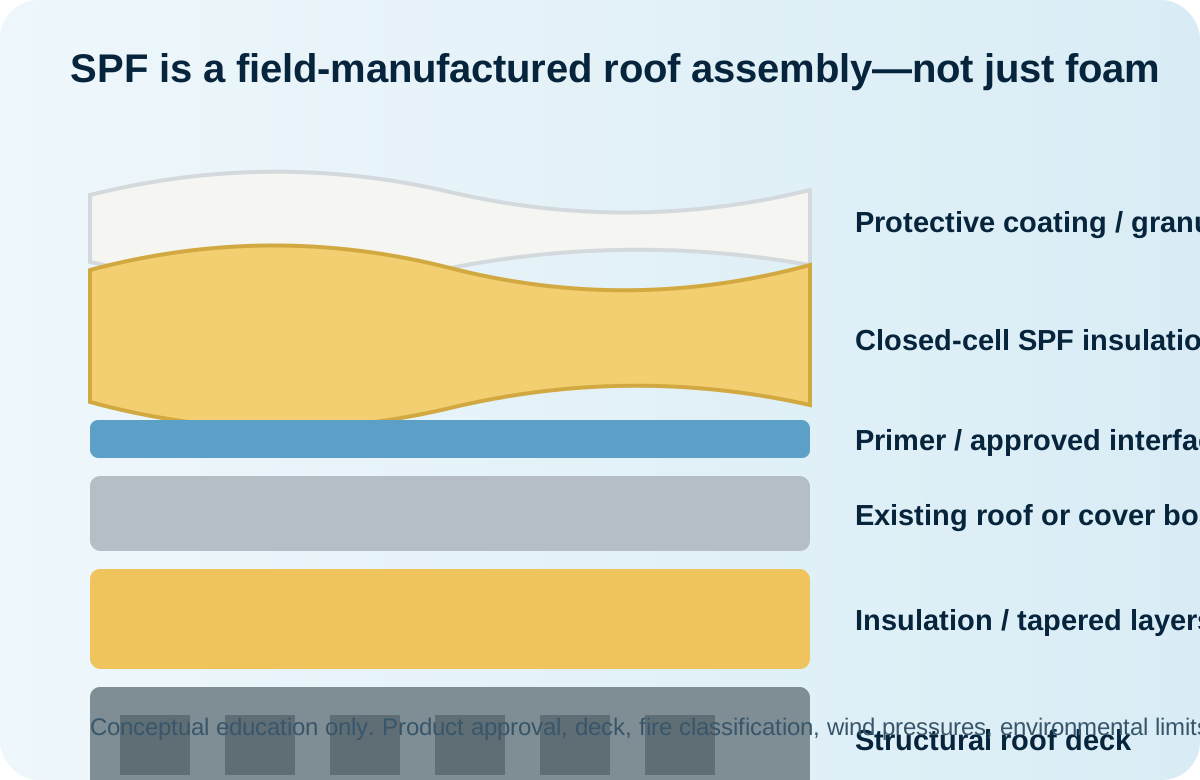
SPF is a field-manufactured roof system—not simply insulation sprayed on a deck
Two liquid components are proportioned, heated and mixed at the spray gun. The foam expands, adheres and cures into a closed-cell insulation layer that must be protected by a compatible roof coating or other approved covering. Substrate condition, equipment settings, weather and workmanship directly affect the finished roof.
Foam layer
Closed-cell spray polyurethane foam provides insulation, adhesion and the ability to vary thickness across the roof.
Protective coating
Acrylic, silicone, polyurethane or another approved covering shields the foam from ultraviolet exposure, weathering and service conditions.
Quality assurance
Pass thickness, density, cell structure, adhesion, profile, drainage, coating thickness and repairs require field verification.
SPF is a field-manufactured roof system — and every retained layer still has to qualify
The responsible sequence is to identify the existing roof, verify moisture and substrate, establish environmental/application controls, specify the foam and protective coating together, and then decide whether the correct capital path is repair, coating renewal, recover or replacement.
Qualify the Existing Roof
Positive identification, layers, moisture, attachment, deck, contamination, drainage and flashing heights come before a recovery or recoat assumption.
Commercial InspectionControl SPF Application
Substrate dryness, dew-point margin, material conditioning, spray technique, wind, overspray, HVAC and occupied-building controls become part of quality.
Protect the Foam
The foam is not the finished exposed roof. A compatible coating system, details, film thickness and future repair/recoat pathway must be specified with it.
Coatings & RestorationRepair / Recoat / Recover
Localized foam rebuilding, coating renewal and roof recovery are different scopes. Each requires dry, serviceable retained materials and compatible written details.
Commercial RecoverReplace When Retention Fails
Widespread moisture, weak substrate, failed attachment, chronic drainage or uneconomic retained conditions move the project toward removal and rebuild.
Commercial Flat ReplacementSix commercial SPF directions
No pathway is automatically best. The existing roof, deck, moisture, adhesion, building operations, slope, wind pressures and coating specification determine the correct system.
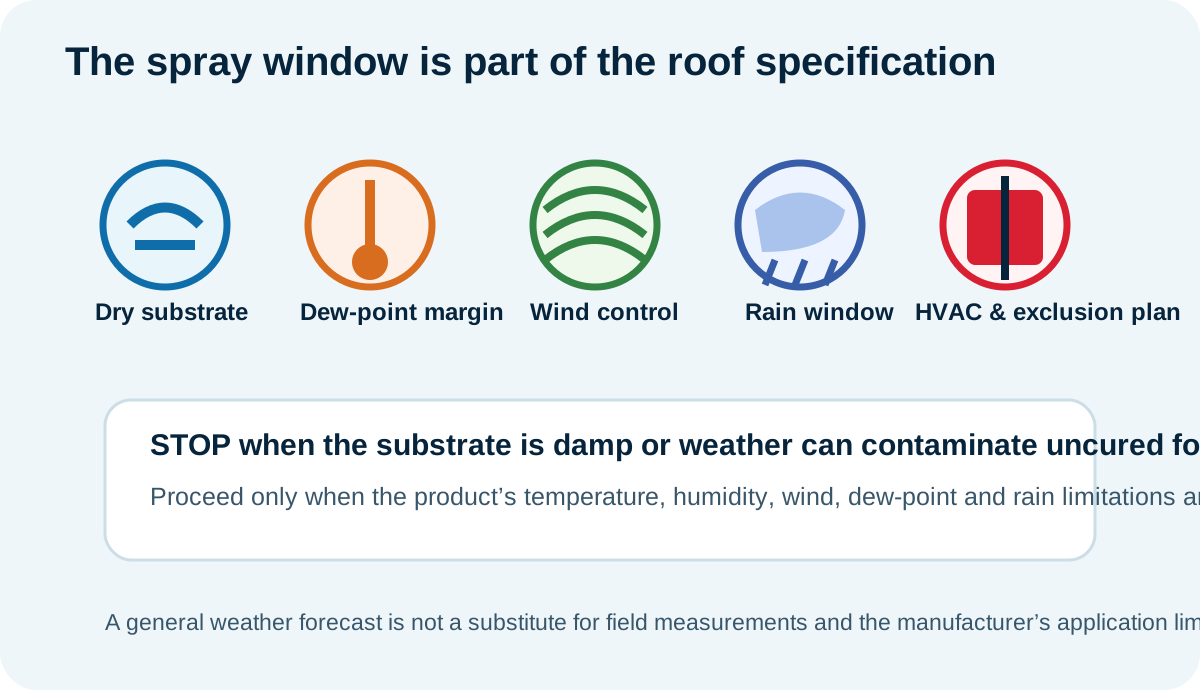
The spray window is part of the roof specification
SPF should not be installed simply because the calendar says it is a roofing day. The actual substrate and weather conditions must remain inside the selected product’s written application limits.
Twelve coordinated parts of a commercial SPF roof
The foam and coating depend on the deck, interface, drainage, flashings, perimeter and field quality-control process.

Equipment settings, substrate conditions and spray technique become part of the roof
Correct foam requires the two components to remain properly conditioned and proportioned while the substrate and weather remain suitable. Off-ratio foam, excessive pass thickness, poor profile, contamination or weak adhesion should be identified and corrected—not buried beneath coating.
Foam thickness affects nominal R-value—but the calculator is not a chemical-yield estimate
The complete building performance still depends on air leakage, thermal bridges, moisture, HVAC, interior loads and actual installed thickness.
Fresh SPF must be protected by a compatible roof coating system
The coating protects the foam from ultraviolet exposure, weathering, service conditions and moisture intrusion. Coating selection and thickness must be specified—not guessed after the foam is installed.
Silicone
Commonly selected where ponding-water resistance and high-solids film build are priorities. Cleaning, primer, wet-film thickness and future recoat compatibility remain product-specific.
Acrylic
Reflective water-based systems can provide strong UV protection where drying and drainage conditions are suitable. Multiple coats and weather windows may be required.
Polyurethane / urethane
Tougher abrasion and impact directions may be useful at traffic or service areas, often as part of a layered system with product-specific topcoat requirements.
Relate roof area to a preliminary coating allowance
This worksheet separates Aastro field-planning allowances from the manufacturer’s required installed system. It does not convert a field allowance into a guaranteed wet- or dry-film thickness.
SPF can be shaped to improve drainage—but foam does not replace structural diagnosis
Variable thickness can help build crickets, saddles and transitions. Structural deflection, compressed insulation, blocked drainage, low overflow or inadequate downstream capacity still require separate correction.
Establish the cause
Determine whether ponding comes from deck deflection, previous insulation, blocked outlets, settlement, curb locations or incomplete slope design.
Create a drainage plan
Map high points, drains, scuppers, overflow, saddles, crickets, sumps and flashing heights before spraying.
Verify the installed profile
Measure slopes and transitions, inspect after rain where practical and document corrected drainage paths.

Foam adhesion does not eliminate roof-zone design
SPF may adhere continuously to a prepared substrate, but the complete uplift path still includes the existing roof or insulation, deck, perimeter, edge metal, penetrations and every underlying attachment layer.

Building protection is part of the roofing scope
SPF application involves reactive chemicals and airborne spray. The plan must control worker exposure, HVAC intakes, occupants, vehicles, neighboring property, wind and emergency communication before spraying begins.
Workers
Training, respiratory protection, skin and eye protection, equipment procedures, exclusion zones and decontamination.
Building occupants
HVAC isolation, notice, access control, interior operations, re-entry requirements and sensitive-occupant planning.
Property and neighbors
Wind monitoring, masking, parking and vehicle protection, adjacent buildings, landscaping and overspray response.
A coated white roof is not automatically an SPF roof
Coated modified bitumen, BUR, TPO, PVC, EPDM, metal and SPF can appear similar from a distance. Core cuts, records, surface profile and controlled investigation may be required before repairs, recoating or recovery are specified.
Review records
Warranty documents, invoices, permits, coating records, product labels, core logs and prior inspection reports.
Inspect the profile
SPF normally has a field-shaped, monolithic profile; seams, board lines, fasteners and asphaltic layers may identify other assemblies.
Investigate beneath the coating
Controlled test cuts can identify foam thickness, density, moisture, substrate and the complete existing assembly.
Match compatible repairs
Use foam, coating, primer and detail materials that are compatible with the identified system and current manufacturer requirements.
The substrate determines whether SPF can adhere and whether the roof below it can remain
SPF may be applied over approved decks or eligible existing roofs, but the underlying material must remain dry, stable, adequately attached and compatible with the complete system.
Structural concrete
Surface profile, curing compounds, contaminants, cracks, moisture and primer requirements must be addressed.
Corrugated steel deck
The insulation or cover board attachment, corrosion, span, openings and wind-zone resistance remain part of the assembly.
Commercial metal roof
Panel attachment, rust, fasteners, seams, movement, penetrations and flute or rib treatment control the retrofit scope.
BUR and modified bitumen
Aggregate, blisters, moisture, weak surfacing, asphalt compatibility, primers and selective removal must be evaluated.
Single-ply membrane
Positive membrane identification, attachment, moisture, cleaning, separation and manufacturer acceptance are required.
LWIC, gypsum and TECTUM
Moisture, density, strength, bond, prior penetrations and the underlying structural deck may determine whether reuse is practical.
Screen the existing roof before building a proposal around reuse
SPF can sometimes support recovery and slope correction, but moisture, weak attachment, contamination, deteriorated substrate and poor drainage can shift the project toward selective or complete removal.
System families require product-specific approval and qualified application
The following references provide system education. They do not state that Aastro holds every manufacturer authorization, SPFA credential or warranty status.
Gaco Roof Foam
Sprayed-in-place closed-cell roof foam used with approved acrylic, silicone or urethane protective coatings for new construction, tear-off and eligible reroof systems.
Huntsman Building Solutions
Commercial closed-cell roofing foam and related roof-system directions with product-specific density, blowing agent, approvals and coating requirements.
NCFI EnduraTech
SPF roof systems paired with silicone or acrylic protection for selected commercial substrates and project conditions.
SPFA certification framework
Industry certification and accreditation programs address installer knowledge, field experience, safety and consistent SPF application. Current Aastro status must be verified before any credential is displayed.
Commercial low-slope conditions that inform SPF planning
These approved Aastro photographs document commercial roof, insulation, coating, metal, wall-detail, drainage and crew conditions. They are not all represented as SPF installations.


Ten controlled steps from investigation to closeout
Records and roof survey
Identify the building, roof history, deck, operations, drainage, moisture and potential SPF objectives.
Moisture and substrate investigation
Map wet materials, complete test cuts and verify the surface can remain.
System and wind design
Select the approved foam, coating, primer, thickness, substrate interface, fire and wind pathway.
Safety and occupied-building plan
Coordinate HVAC intakes, exclusion zones, overspray, access, notices and emergency procedures.
Surface preparation
Remove contamination, loose material, wet areas, rust, aggregate or incompatible components.
Primer and test area
Apply the specified primer and establish adhesion or field-test acceptance where required.
SPF application
Control proportioning, temperature, pass thickness, density, profile, slope and repairs.
Protective coating
Apply the specified acrylic, silicone, urethane or other covering at measured wet and dry thickness.
Details and protection
Complete flashings, drains, edges, granules, walkways, pads and penetrations.
Inspection and roof file
Document measurements, corrections, photographs, maintenance requirements and warranty records.
Build the next step around the property—not around a generic foam recommendation
Answer seven questions. The result will provide one primary next action and only the secondary actions that fit the condition.
Complete the seven questions
The recommendation is educational and remains subject to field investigation, product approval, code, engineering and manufacturer requirements.
Commercial SPF roofing FAQs
Is spray polyurethane foam a roof covering or insulation?
It functions as closed-cell roof insulation and part of a roofing system. It must be protected by a compatible coating or other approved covering and installed as part of a complete assembly.
Can SPF be installed over an existing roof?
Sometimes. The existing layers, moisture, attachment, substrate stability, drainage, fire classification, wind design and manufacturer requirements must first support recovery.
Can SPF create slope?
Variable foam thickness can create crickets, saddles and drainage transitions. Structural deflection, blocked outlets and major drainage deficiencies still require separate diagnosis and correction.
How soon must foam be coated?
The current Florida Building Code requires a compliant protective coating no less than two hours and no more than 72 hours after foam application, subject to the governing system documents and environmental conditions.
Is an SPF roof seamless?
The foam layer is sprayed continuously and can reduce conventional field seams, but flashings, penetrations, curbs, drains, edges, transitions and coating details remain critical.
Does SPF automatically stop ponding water?
No. Foam can be shaped to improve drainage, but the cause of ponding, structural slope, drain capacity, overflow and flashing height must be resolved in the design.
Can SPF be applied over commercial metal roofing?
Potentially, after evaluating panel attachment, corrosion, fasteners, seams, movement, moisture, penetrations, wind pressures and the approved interface.
Why are wind and overspray important?
Wind can change spray placement, material loss and exposure to adjacent property. The work plan must establish application limits, masking, exclusion zones and HVAC controls.
Are isocyanates a safety concern?
Yes. SPF components include isocyanates, so trained personnel, respiratory and skin protection, exclusion controls, HVAC planning and the product safety requirements are necessary.
Can wet roof materials remain under SPF?
Widespread wet or deteriorated materials generally shift the project toward removal or major correction. Limited conditions require mapping, verification and a written removal plan.
How is SPF thickness verified?
Specifications may require probe measurements, marked locations, sample cuts, daily records and other quality-control procedures. Average thickness alone should not conceal thin areas.
Does a reflective SPF coating guarantee energy savings?
No. Reflectivity and foam thickness can affect heat flow, but building performance also depends on air leakage, HVAC, interior loads, thermal bridges, moisture and operating conditions.
Can an existing SPF roof be repaired or recoated?
Often, when the foam remains dry, well adhered and structurally serviceable. Damaged foam must be removed and rebuilt before the protective coating is renewed.
What maintenance does SPF require?
Regular inspection, prompt repair of coating damage, controlled traffic, drain cleaning and periodic recoating may be needed to preserve the foam and written warranty rights.
Is a manufacturer warranty automatic?
No. Eligibility depends on the product, approved system, applicator status, inspection, registration, maintenance and the signed warranty terms.
What should a commercial SPF proposal identify?
The existing roof and deck, moisture investigation, foam product and density, thickness, coating system, film thickness, primer, drainage, details, wind design, safety plan, exclusions, quality control, closeout and warranty pathway.
Bring the roof records, moisture information and operational constraints into the first conversation
Submitting this form opens a pre-addressed email to Aastro Roofing. Send that email to complete your request. For immediate service, call 561-409-3280.
SPF specifications must resolve to the exact foam, coating, substrate and approved assembly
These resources anchor the authority website. The current Florida code edition, product approval, manufacturer application limits, coating requirements and project-specific wind/fire details still require verification at permitting and warranty registration.
Florida Building Code — SPF Roofing
The 8th Edition (2023) Florida Building Code contains a dedicated sprayed polyurethane foam roofing section. The current code requires the foam system and its protective coating to comply with the applicable roof-system provisions.
2023 FBC Chapter 15ASTM D7425 / D7425M-25
Current material specification for spray polyurethane foam used in roofing applications. It addresses foam types and physical properties; it is not a substitute for project application guidance.
ASTM SPF roofing standardsASTM D5469 / D5469M-25
Current guide for application of new spray-applied polyurethane foam and coated roofing systems. Use it together with the exact manufacturer system and approval documents.
ASTM D08.06 SPF standardsSPFA Roof Evaluation & Renewal
SPFA technical resources include roof-assembly evaluation, maintenance, renewal/recoat and damage-repair guidance. They support investigation first rather than coating over unknown conditions.
SPFA technical documentsCurrent Manufacturer Example
Gaco’s current roof-foam literature treats SPF plus an approved protective coating as the complete roof system and addresses new construction, tear-off and reroof/recover applications. This is a product example, not an Aastro authorization claim.
GacoRoofFoam resourcesFlorida Product Approval
Exact project eligibility, deck/interface, wind pressures, fire classification, perimeter/corner conditions and component limitations must be checked against the current approval or evaluation path before construction.
Florida Product Approval searchDetermine whether SPF fits the deck, moisture condition, operations and wind design before pricing the finish coat
One commercial investigation can establish the existing roof, substrate, moisture, drainage, overspray constraints and realistic repair, recoat, recovery or replacement paths.